Screen Time for Preschoolers: How Much Is Right?
How much screen time for preschoolers is healthy? What WHO recommends for ages 3–4, and practical ways to make short screen sessions active and useful.
Also available in Tiếng Việt
Most parents want to know one thing about screen time for preschoolers: how much is too much? The World Health Organization gives a clear answer for children aged 3–4, and there are simple ways to make the time your child does spend on a screen shorter, more active and more useful. This guide covers both.
How much screen time is recommended for preschoolers?
The WHO guidelines on physical activity, sedentary behaviour and sleep for children under 5 recommend that children aged 3–4 have no more than 1 hour of sedentary screen time a day, and less is better. Sedentary screen time means sitting still while watching TV or videos or playing on a device.
The same guidelines look at the whole day, not only screens. For children aged 3–4 they recommend:
| Area | WHO recommendation for ages 3–4 |
|---|---|
| Physical activity | At least 180 minutes a day, of any intensity, including at least 60 minutes of moderate-to-vigorous activity |
| Sedentary screen time | No more than 1 hour a day; less is better |
| Sitting still | Not restrained for more than 1 hour at a time |
| Sleep | 10–13 hours of good-quality sleep, including naps, with regular sleep and wake-up times |
In practice, this means screens should take a small place in a day that is mostly play, movement, reading and sleep.
Not all screen time is the same
The WHO limit is about total sedentary time. Within that limit, how the time is used also matters to parents:
- Passive vs. active. Watching videos one after another is passive. Activities where your child has to think, answer, count or choose ask for more attention.
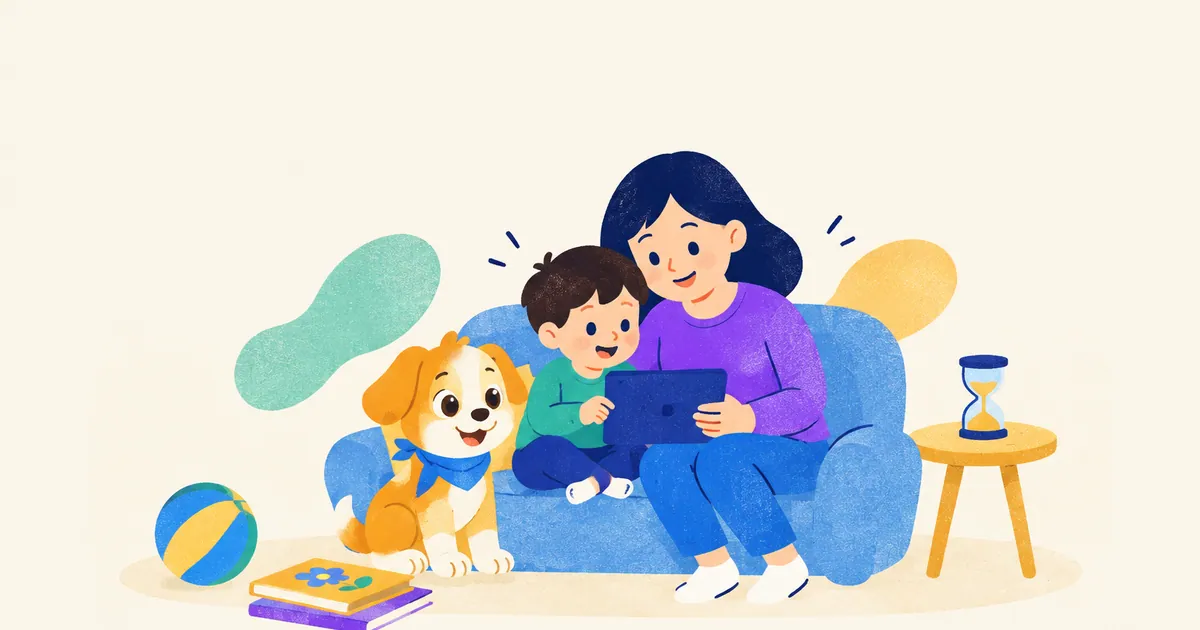
- Alone vs. together. When you sit with your child, talk about what is on the screen and connect it to real life, screen time becomes a conversation.
- Endless vs. finished. Content with a clear end point (a short lesson or a game round) is easier to stop than autoplay.
How to make screen time healthier
- Set a routine. Decide when screens happen, for example one short session after dinner, instead of negotiating every time.
- Keep sessions short. Ten to fifteen minutes is enough for most learning activities at this age.
- Sit together. Ask questions: "What letter is that? How many stars can you see?"
- Choose content with an end. Prefer short lessons and games over autoplay videos.
- Keep screens out of bedtime. Protect the 10–13 hours of sleep WHO recommends.
- Balance it with movement. After a screen session, go outside, dance or build something together.
What to look for in a learning app for preschoolers
If you use an app, look for one that:
- is designed for your child's age group,
- has short activities with a clear finish,
- asks your child to do something, not only watch,
- covers skills they will need at school, such as early math, letters and simple logic, and
- lets you see what your child has practiced.
For a list of the skills worth practicing before school, see our kindergarten readiness checklist.
How Biibo Kids fits in
Biibo Kids is a learning app for children aged 3–6. It is designed around games, animation and interactive activities rather than passive viewing, and covers math, Vietnamese, English, science, logic and life skills. The goal is short, purposeful sessions that fit inside a healthy day, not more time on screens.
Have a question about Biibo Kids? Send it through the contact form on the Biibo homepage and our team will get back to you.
Summary
For preschoolers aged 3–4, WHO recommends no more than 1 hour of sedentary screen time a day, with plenty of active play and sleep. Keep sessions short, sit with your child, choose content with a clear end, and balance screens with movement.
Frequently asked questions
How much screen time should a 3 or 4 year old have?
The World Health Organization recommends no more than 1 hour of sedentary screen time a day for children aged 3–4, and says less is better.
Are learning apps better than watching videos?
What matters most is the total time, the content, and whether an adult is involved. Short sessions of age-appropriate content, used together with a parent, are easier to fit into a healthy day than long passive viewing.
What should preschoolers do instead of screens?
Active play, reading together, drawing, building and outdoor time. WHO recommends that children aged 3–4 spend at least 180 minutes a day in physical activity of any intensity.