Kindergarten Readiness Checklist: Skills to Practice at Home
A practical kindergarten readiness checklist for parents of 3–6 year olds: self-care, social, language, early math and motor skills to practice at home.
Also available in Tiếng Việt
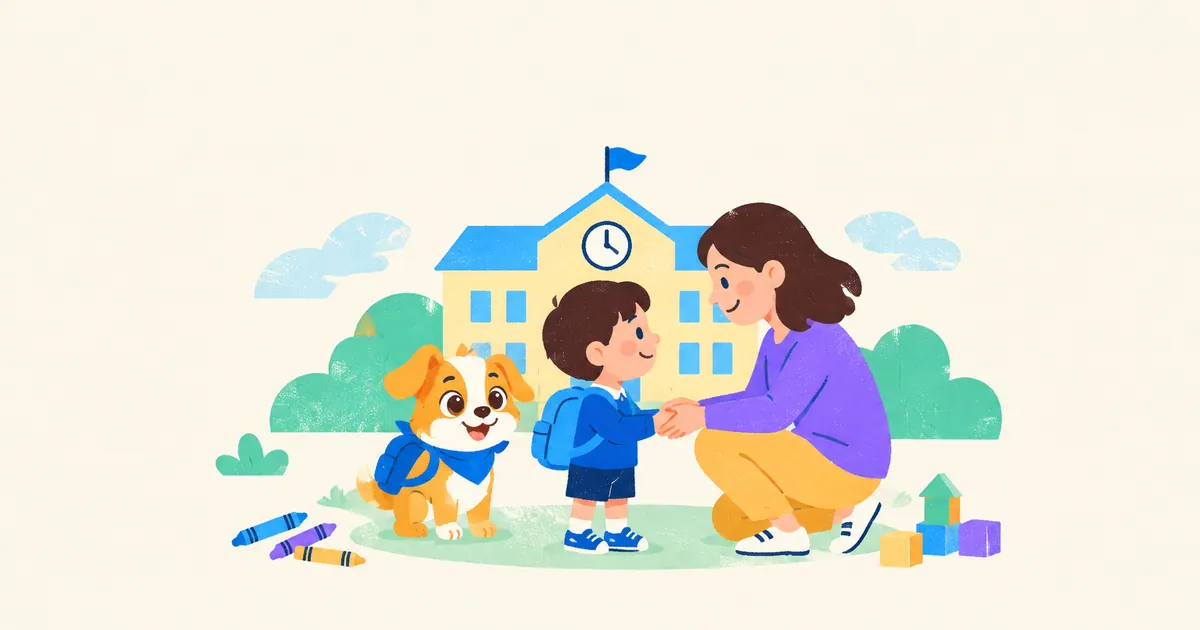
A kindergarten readiness checklist helps you see which everyday skills your child already has and which ones to practice before the first day of school. Readiness is not only about knowing letters and numbers. It is also about independence, getting along with other children and being able to focus for a few minutes at a time. This guide groups the skills into five areas and gives simple ways to practice each one at home.
What does kindergarten readiness mean?
Kindergarten readiness means a child has the basic skills to feel comfortable and learn in a classroom. Teachers look for children who can manage simple tasks on their own, follow a short instruction, take turns and stay with an activity for a little while.
The US Centers for Disease Control and Prevention (CDC) publishes developmental milestones for 5-year-olds. Examples include following rules or taking turns when playing games, counting to 10, paying attention for 5 to 10 minutes during activities and writing some letters in their name. The checklist below builds on the same areas.
The kindergarten readiness checklist
Tick what your child can already do and pick one or two items to practice each week.
Self-care and independence
- Uses the toilet and washes hands without help.
- Puts on shoes and a jacket, and tries buttons and zippers.
- Eats a snack on their own and clears up afterwards.
- Packs and carries their own bag.
Social and emotional skills
- Takes turns and shares toys during play.
- Follows simple rules in a game.
- Says goodbye to a parent without a long struggle.
- Names feelings such as happy, sad or angry, and asks an adult for help.
Language and early literacy
- Tells a short story with a beginning and an end.
- Answers simple questions about a book you read together.
- Recognizes some letters, especially the ones in their name.
- Hears simple rhymes, such as cat and hat.
Letter sounds and rhymes are easy to practice through play: see how to teach phonics to preschoolers.
Early math and thinking
- Counts to 10 and knows that the last number counted is "how many".
- Recognizes some numbers between 1 and 5.
- Sorts objects by color, shape or size.
- Uses time words such as yesterday, tomorrow, morning and night.
Fine and gross motor skills
- Holds a crayon or pencil with a steady grip.
- Draws simple shapes and tries to write some letters.
- Cuts along a line with child-safe scissors.
- Hops, runs, climbs and catches a large ball.
How to practice school readiness skills at home
You do not need worksheets or long lessons. Young children learn best through play and daily routines.
- Read together every day. Ask what happened and what might happen next. This builds vocabulary and listening skills.
- Count everything. Stairs, apples, cars on the street. Then ask "how many?" at the end.
- Let them do it themselves. Give a little more time in the morning so your child can dress and pack their bag.
- Play turn-taking games. Simple board games teach waiting, rules and how to win or lose kindly.
- Draw, cut and build. Crayons, playdough, blocks and puzzles all strengthen the small hand muscles needed for writing.
- Practice a school-day routine. A few weeks before school starts, move to regular bedtimes and wake-up times.
A simple weekly plan
| Day | 10-minute activity | Skill area |
|---|---|---|
| Monday | Read a picture book and retell it | Language |
| Tuesday | Count and sort toys by color | Early math |
| Wednesday | Playdough letters from their name | Motor and literacy |
| Thursday | A board game with turn-taking | Social |
| Friday | Dress for the day without help | Self-care |
Keep it light and stop while your child is still enjoying it.
How Biibo Kids helps
Biibo Kids is a learning app for children aged 3–6. It is designed to build school-readiness skills through games, animation and playful interaction, across math, Vietnamese, English, science, logic and life skills. Like every Biibo product, it is built around short sessions and review at the right time.
Have a question about Biibo Kids? Send it through the contact form on the Biibo homepage and our team will get back to you.
Summary
A kindergarten readiness checklist is most useful as a plan for play. Focus on independence, getting along with others, language, early math and hand skills, practice a little every day, and follow your child's pace. For more on how Biibo approaches learning, see how Biibo works.
Frequently asked questions
What skills should a child have before starting school?
Most checklists cover five areas: self-care, social and emotional skills, language and early literacy, early math, and fine and gross motor skills. Academics matter, but independence and getting along with others matter just as much.
What if my child cannot do everything on the checklist?
That is normal. Children develop at different speeds, and a checklist is a guide for practice, not a test. If you are worried about your child's development, talk to your pediatrician.
How much time should we spend practicing each day?
Short, regular practice works best for young children. Ten to fifteen minutes of play-based activities a day, plus reading together, is a good place to start.